Supplemental benefits on Medicare Advantage plans
Extra benefits on Medicare plans, explained without the hype
Extra benefits are the dental, vision, hearing, over-the-counter, transportation and premium-reduction perks that some Medicare Advantage plans add on top of what Medicare covers. They are real, heavily advertised, and widely misunderstood. This page explains which extra benefits exist, who actually qualifies, and how to weigh them without wrecking your coverage.
What extra benefits actually are
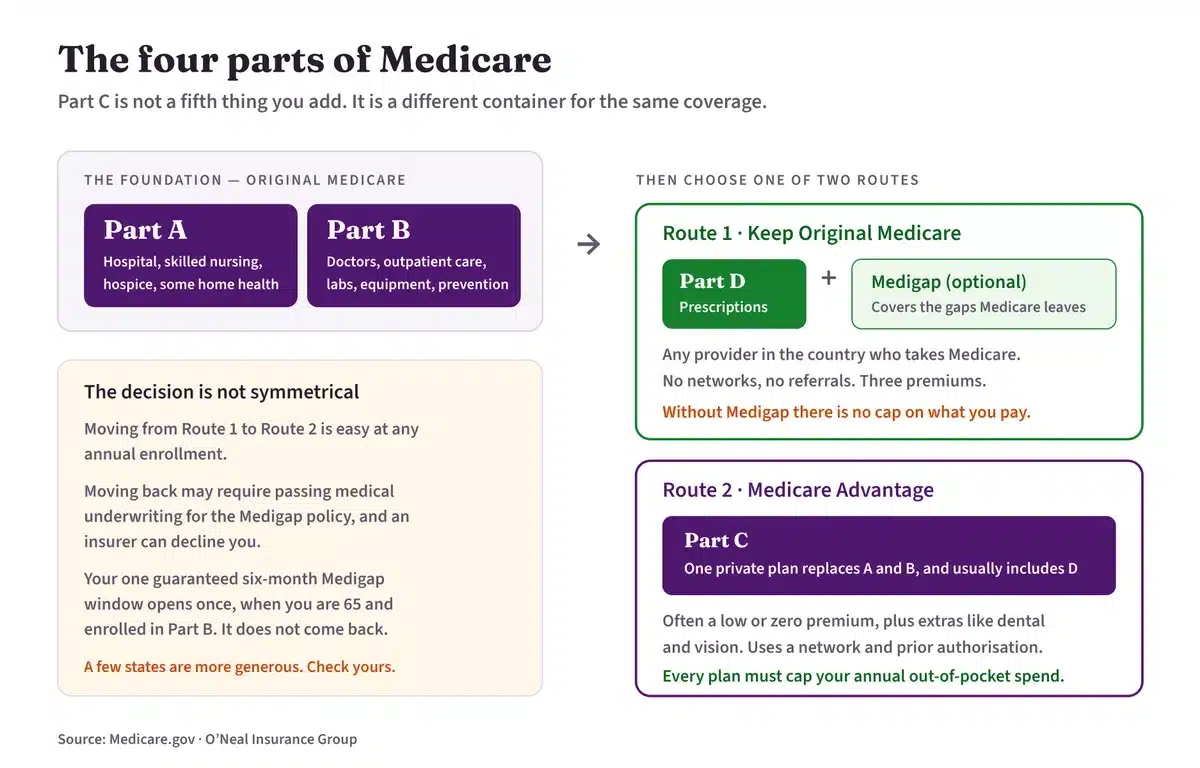
Original Medicare, meaning Part A and Part B, covers hospital and medical care. It does not cover routine dental, routine vision, hearing aids, or over-the-counter supplies.
Medicare Advantage plans are allowed to add benefits beyond that baseline. Those additions are the supplemental benefits you see in advertising. Insurers use them to make one plan more appealing than another in the same county.
Because they are optional additions rather than program entitlements, these perks differ from plan to plan, from county to county, and from one plan year to the next. Two neighbors on different plans can have completely different supplemental coverage.
Medicare publishes what the program itself covers at Medicare.gov coverage. Everything past that list is a plan decision.
Go deeper
The extra benefits people ask about most
Each of these has its own page with the eligibility rules, the trade-offs, and the questions worth asking before you enroll.
Flex cards and OTC allowances
Prepaid cards loaded with a spending allowance for over-the-counter health items, and on some plans dental, vision, groceries or utilities.
Flex cards and OTC allowances →Part B give back
A benefit on some plans that pays part of your monthly Part B premium, which makes your Social Security deposit larger.
Part B give back benefits →Dual eligible support
If you have both Medicare and Medicaid, the extra benefits available to you are usually far broader than on a general plan.
Medicare and Medicaid together →Dental, vision and hearing extra benefits
Dental
Plans typically split dental into preventive care such as cleanings and X-rays, and comprehensive care such as fillings, extractions, crowns and dentures. Preventive is often covered at little or no cost. Comprehensive usually carries an annual maximum and a share of cost.
Read the annual maximum carefully. A plan advertising generous dental coverage may cap the comprehensive side at a figure a single crown would exhaust.
Vision
Routine eye exams are commonly included, along with an allowance toward frames or contact lenses on a set schedule, often once every year or two.
Hearing
Hearing coverage usually pairs a routine exam with an allowance toward hearing aids, frequently through a specific supplier network. If you already work with an audiologist, confirm they participate before you rely on the benefit.
Everyday-living extra benefits
- Transportation: a set number of rides each year to medical appointments and sometimes the pharmacy
- Fitness: membership in a national gym network, often with at-home options for people who prefer them
- Meals after a hospital stay: a short run of delivered meals following an inpatient discharge
- In-home support: limited help with daily tasks, generally on Special Needs Plans
- Telehealth: virtual visits, sometimes at a lower copay than an in-person visit
- Worldwide emergency coverage: useful if you travel, and not part of Original Medicare
This category varies more than any other. Availability depends heavily on the plan and the county.
Who qualifies for the biggest extra benefits
The most generous supplemental packages are concentrated on Special Needs Plans, which require a qualifying circumstance rather than being open to everyone.
Dual Eligible Special Needs Plans
For people enrolled in both Medicare and Medicaid. These plans carry the broadest supplemental packages, including the large grocery and utility allowances featured in advertising.
Chronic Condition Special Needs Plans
For people with a qualifying chronic illness, confirmed by a physician. Benefits are often tailored to that condition.
Institutional Special Needs Plans
For people living in a nursing facility or receiving an equivalent level of care at home.
If none of these apply to you, what is realistically available to you are the more modest allowances on general Medicare Advantage plans in your county.
Weighing extra benefits without a costly mistake
Perks are the last thing to compare, not the first. Choosing a plan for its perks before checking the fundamentals is the most expensive error people make in Medicare.
Network comes first
Confirm every doctor and specialist you intend to keep is in the plan network for the coming year. One out-of-network specialist can outweigh every perk on the plan.
Prescriptions come second
Check every drug, with its dose, against the plan formulary and note the tier. Drug costs move far more money than a dental allowance does.
How to compare extra benefits properly
Work in this order. The first three steps decide whether the fourth matters at all.
- List your doctors and confirm each is in network for the plan year you are entering
- List your prescriptions with doses and check each against the formulary and its tier
- Compare the copays for services you actually use and the annual maximum out-of-pocket
- Only now compare the extra benefits, and value each perk at what you would realistically use
- Confirm every figure applies to your county and the coming plan year, not the one ending
You can see every plan in your ZIP code, with its benefit summary, at Medicare.gov Plan Compare. Free unbiased counseling is available from your State Health Insurance Assistance Program.
Extra benefits change every year
Every fall your plan mails an Annual Notice of Change listing what is different for the coming year. Supplemental coverage is among the most frequently adjusted item in that notice.
An allowance can shrink, a dental maximum can drop, a transportation benefit can disappear, and the plan only has to tell you in that document. Read it when it arrives rather than assuming this year looks like last year.
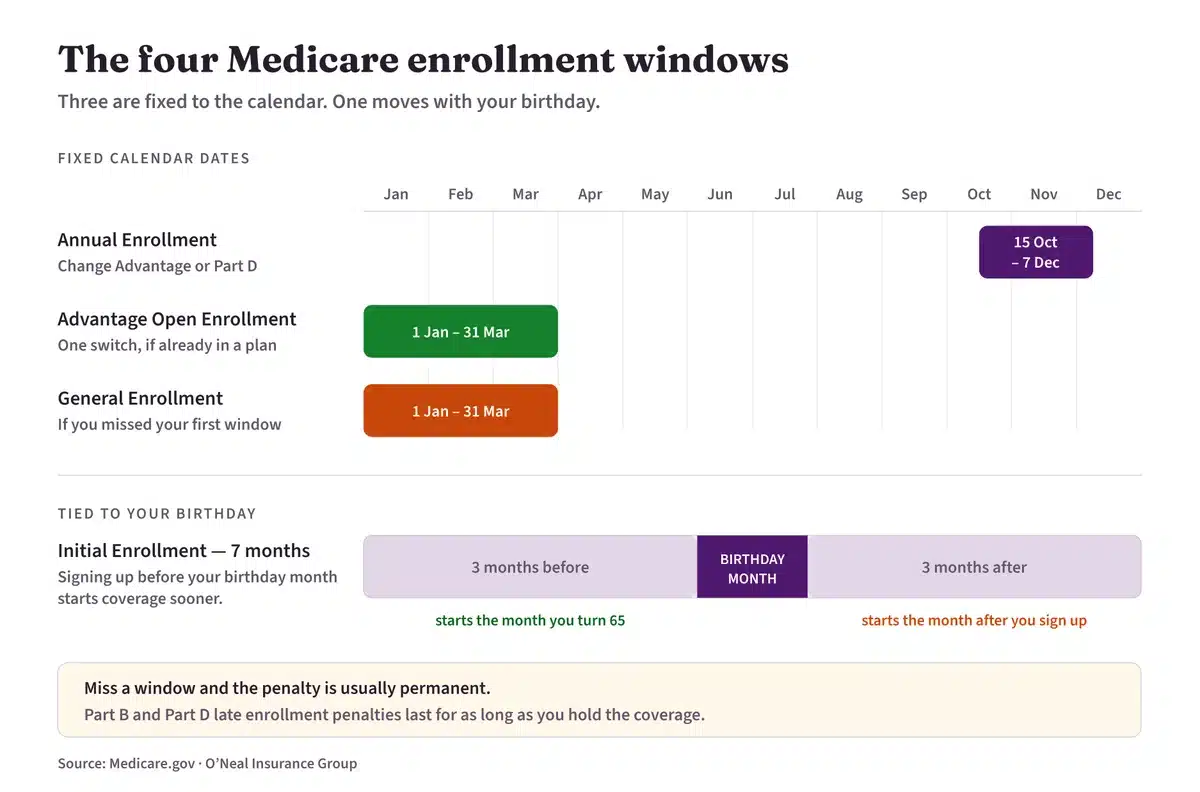
The Medicare overview page explains the enrollment windows during which you can act on what that notice says.
Advertising claims about extra benefits
Medicare marketing is regulated, and accurate advertising is required. Even so, some messaging leans on the vaguest wording allowed.
Treat with caution anything implying these perks come from the government, suggesting a universal entitlement, using a deadline that is not a real Medicare enrollment period, or asking for your Medicare number before you have chosen a plan.
Misleading Medicare marketing can be reported to 1-800-MEDICARE.
Ask before you decide
Frequently asked questions about extra benefits
Does Original Medicare include extra benefits?
No. Extra benefits such as routine dental, vision, hearing and over-the-counter allowances come from Medicare Advantage plans that choose to offer them.
Can I add extra benefits to a Medigap plan?
Not through the Medigap policy itself. Medigap helps with Original Medicare cost sharing. Standalone dental or vision policies are a separate purchase.
Do extra benefits cost more in premium?
Not always. Many plans with extra benefits carry a low or zero monthly premium, and fund the benefits through network design and cost sharing instead.
Are the large grocery allowances real?
Yes, but they are generally tied to Special Needs Plans requiring a qualifying condition, and they are not offered in every county.
Can extra benefits be taken away mid-year?
Benefits are set for the plan year. Changes normally take effect on January 1 and are disclosed in the Annual Notice of Change sent the preceding fall.
Does your help cost anything?
No additional fee is charged to you for O'Neal Insurance Group's guidance. Agents may be compensated by an insurance carrier when an enrollment occurs.
Important: Extra benefits, and whether they are offered at all, vary by plan, by county, and by year. Not everyone qualifies, and not every plan includes them. Nothing on this page is an offer of coverage or a statement of what any specific plan provides. We do not offer every plan available in your area. Any information we provide is limited to those plans we do offer in your area. Please contact Medicare.gov, 1-800-MEDICARE, or your State Health Insurance Assistance Program to get information on all of your options.
Official resource
Where the money for extra benefits comes from
Understanding the funding explains almost everything else about how these benefits behave — why they vary so much by county, why they change annually, and why the richest packages appear in some places and not others.
Private Medicare plans bid against a benchmark for each county. When a plan bids below the benchmark it keeps a share of the difference as a rebate, and that rebate must be spent on reducing costs or adding benefits. Plans with higher star ratings keep a larger share.
Two consequences follow. First, extra benefits are concentrated where benchmarks are generous relative to local costs, which is why a plan in one county offers a substantial allowance while the same insurer offers little a hundred miles away. Second, a plan whose star rating falls keeps a smaller rebate, and the benefit package thins a year or two later.
MedPAC projected that Medicare will pay private plans about 14 percent more for their enrollees in 2026 than the same people would cost in Original Medicare — roughly $76 billion. That gap is the source of the extra benefits. It is a fair thing to know, and it is not an argument against using them.
The benefits with eligibility rules attached
A category called Special Supplemental Benefits for the Chronically Ill sits behind much of the advertising that promises groceries, utilities or transport. These are not available to everyone on the plan. They are restricted to enrollees with a qualifying chronic condition who meet criteria the plan itself sets.
This is the single biggest gap between what people expect from extra benefits and what they receive. An advertisement showing a grocery allowance is describing something a minority of that plan’s members will qualify for, and the advertisement rarely says so clearly.
CMS has moved on this. Under rules taking effect for the 2027 plan year, plans must publicly post the eligibility criteria they have developed for these benefits, so the conditions can be read before you enroll rather than discovered afterwards. CMS has also clarified how debit-card style allowances may be administered.
Until that information is easy to find, the practical approach is to ask a direct question and expect a direct answer: do I qualify for this specific benefit, based on my specific conditions, and what document says so? If nobody will answer that in writing, treat the benefit as advertising rather than coverage.
Which extras are insurance, and which are not
This distinction is worth more than it sounds. A filed supplemental benefit is part of the plan’s approved benefit package. It appears in the Evidence of Coverage, it cannot be withdrawn mid-year, and a denial can be appealed through the normal process.
A value-added service is different. Gym memberships, nurse lines, discount arrangements for vision or hearing, wellness programs and similar offerings are frequently described by carriers in their own documents as additional member services that are not insurance, are subject to geographic availability, and may be discontinued at any time.
Both kinds of extra benefits can be worth having. But if a discount program is decisive in your comparison, you are letting something that can be withdrawn without notice outweigh things that cannot. Read the disclaimer at the bottom of the page; it usually says exactly which category you are looking at.
Doing the arithmetic honestly
The way to compare a benefit package is to convert it into the amount you would actually use, not the maximum advertised.
A $2,500 dental allowance is worth $2,500 only if you have $2,500 of dental work you intend to have done, at a dentist in the plan’s network, within the categories the allowance covers. Many allowances split between preventive and major services with separate limits, and many require a network dentist while your own dentist is out of network. The realistic figure is often a fraction of the headline.
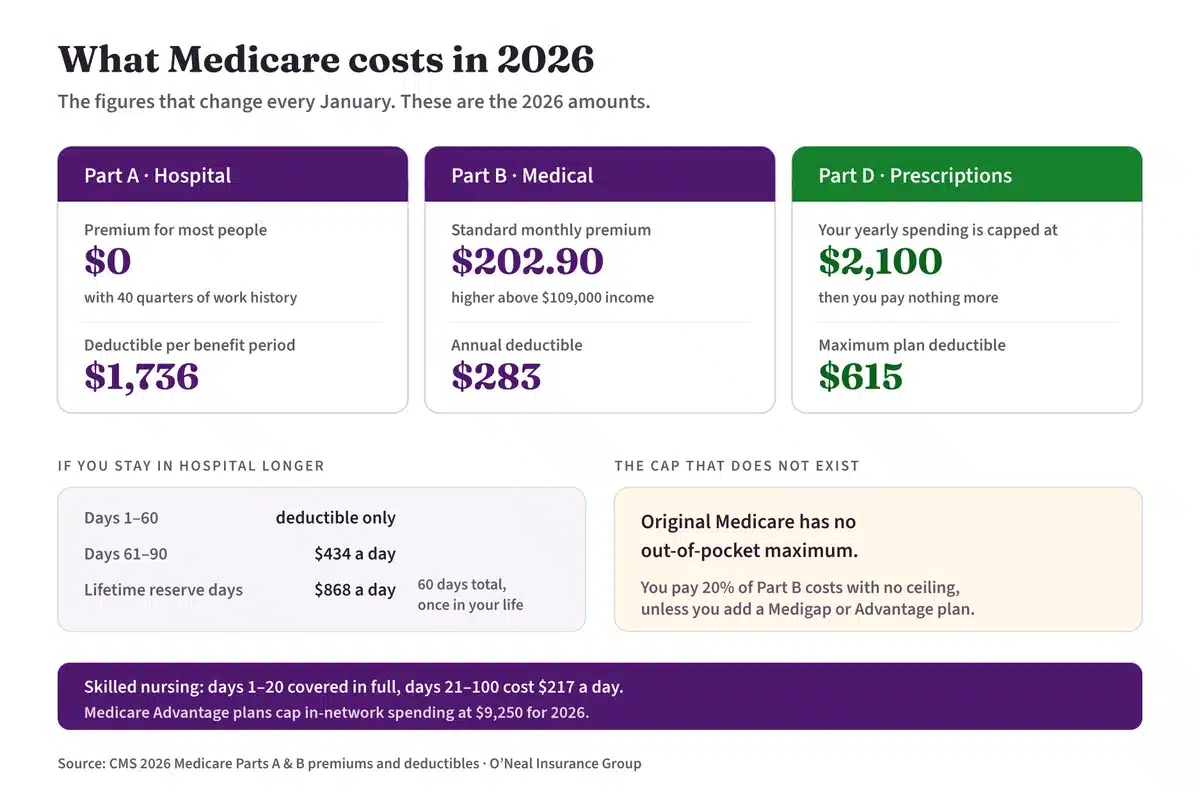
Then set that realistic figure against the numbers that move in the other direction: the annual out-of-pocket maximum, which CMS caps at $9,250 in network for 2026 but which plans set individually, and how your specific prescriptions are tiered. A richer benefit package attached to a higher out-of-pocket ceiling is a worse plan in the year you need care, and a better one in every year you do not.
That is the whole trade, and it is why extra benefits should be the last thing you compare rather than the first. Network, drug coverage and the out-of-pocket cap decide what a plan costs you. The extras decide between two plans that are already close.
Four questions that settle it
- Do I personally qualify? Some extra benefits are restricted to people with particular conditions. Ask which category this one falls into.
- Is it insurance or a discount? Filed benefits cannot be withdrawn mid-year. Value-added services can.
- Where can I use it? An allowance restricted to a network, a card restricted to approved items, or a catalogue you must order from are all common and rarely prominent.
- What does it cost me elsewhere? A richer package attached to a higher out-of-pocket maximum is a worse plan in the year you need care.
None of that means extra benefits are not worth having, and we are not suggesting you discount them. Most are, and for some households the dental allowance alone justifies the choice. It means they belong at the end of the comparison rather than the start of it, and that a benefit nobody will describe precisely is usually smaller than it appears.
If you want to see what is genuinely offered where you live rather than what is advertised nationally, that is a county-level question and it takes one conversation to answer properly. We will show you the plan documents rather than a summary of them, and we will point out where the extra benefits are narrower than the headline suggests.
Check the source, then ask for personal help
Educational information is general. A licensed agent can help with plan comparisons; agents do not provide medical, legal, or official eligibility advice.
Personal guidance · No additional fee
See which extra benefits are actually offered in your county
We check your doctors and prescriptions first, then show you what the extra benefits are really worth on the plans available where you live.
Medicare reference charts
The charts below cover the ground most questions start from.